Hi! You’re reading this, correct? What about someone who has low literacy? What does that actually mean for them?
Low literacy means ‘not good at reading’
UNESCO describes literacy in terms of life skills, and emphasises that literacy is a continuum:
Literacy is a continuum of learning and proficiency in reading, writing and using numbers throughout life and is part of a larger set of skills, which include digital skills, media literacy, education for sustainable development and global citizenship as well as job-specific skills.
In order to measure literacy, agencies describe ‘levels’ that typically start from ‘entry level’ or ‘below level 1’ and proceed to some higher level, such as ‘level 5’.
There is a lot of low literacy about
In the UK, literacy is assessed by the individual devolved countries: England, Scotland, Wales, and Northern Ireland. One major investigation in 2011 in the England discovered that 45% of people aged 16 to 65 read at literacy level 1 or below; around 3% of them only read at Entry Level 1 or below. Numeracy scores are worse.
Since 2011, the ways of measuring literacy have changed somewhat but low literacy persists.
What does it mean to have low literacy?
I’ve extracted and adapted these definitions from that ‘Skills for life survey’.
If you can use a cash point, you’re at or beyond Entry Level 2
At Entry Level 1, you can:
- write a short message to your family
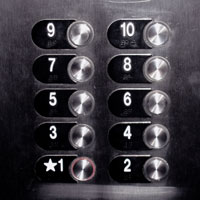
- select a floor number in an elevator or lift.
At Entry Level 2, you can also:
- describe a child’s symptoms to a doctor
- use a cash point to withdraw cash
- use a mobile phone to make calls
- enter small amounts of information into a website or app.
At Entry Level 3, you can also:
- understand price labels on pre-packaged food or
- pay household bills
- use a website or app to find simple information.
At Level 1, you can also:
- read bus or train timetables
- check the pay and deductions on a wage slip
- select and use a variety of appropriate sources of information including from websites
- enter, organise, format and bring together simple information such as writing a letter.
At Level 2, you can also:
- compare products and services for the best buy
- work out a household budget
- use a variety of appropriate sources of information and evaluate its fitness for purpose
- evaluate and use different methods of organising and presenting information, taking into account fitness for purpose and audience.
Adapted from The 2011 Skills for Life Survey: A Survey of Literacy, Numeracy and ICT Levels in England
45% of people read at Level 1 or below
Let’s look again at that statistic: “In the UK, 45% of people aged between 16 and 65 read at level 1 or below.”
That means that their reading skills are not good enough to compare prices for a best buy. They can’t work out a household budget. They struggle to decide whether a website is telling them the truth or not. And they may not be able to write well enough to complain.
If you have low literacy, life can be complicated and expensive – and getting help may be too hard for you.
Please help with this post
If you have comments or suggestions about how to make this post more useful or accurate, please contact me.
History: Originally written in 2021, links and definitions updated in 2025